
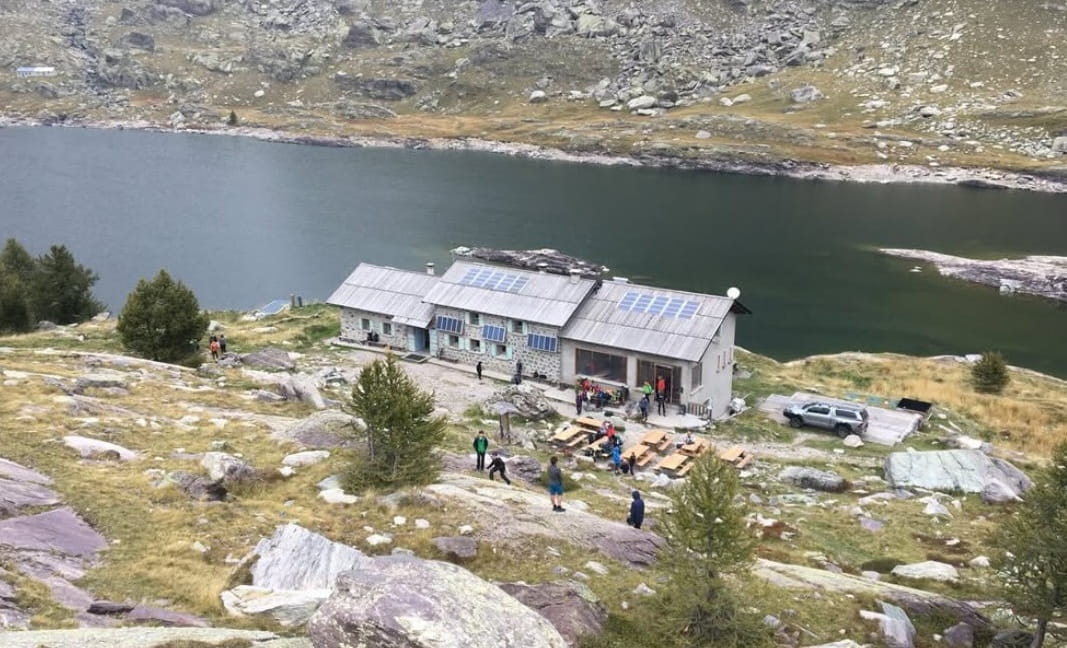
It is one of the most iconic refuges in the Alpes-Maritimes that is set to get a makeover. Perched at an altitude of 2,130 metres, the Refuge des Merveilles is to undergo a complete renovation. A project estimated at 3.5 million euros, led by the French Alpine and Mountain Club Federation (FFCAM), could begin in the summer of 2027 with a reopening scheduled for 2029.
The refuge is not in its first life. Built in 1913 to house the workers of the lake dam, it served as barracks for Italian soldiers during the Second World War, before being handed over to the French Alpine Club in 1949.
Each year, it accommodates around 8,000 overnight stays, but its facilities and organisation can no longer keep up. The FFCAM considers the building to be aging, no longer up to standard, and poorly integrated into this listed site.
The project therefore aims to completely reorganise the interior while maintaining the current capacity. It must be said that the refuge is a combination of three volumes, dating from 1913, 1970 and 2000.
The stone facades of the oldest part will be preserved, the extensions clad in wood and the currently disjointed roofs unified for better harmony with the landscape.
More space, a breathtaking view
Inside, everything has been redesigned. The west wing, facing the lake and the Vallée des Merveilles, will bring together the communal areas. The common room will open out onto the landscape thanks to large bay windows, with a view of the lake and Mount Bégo.
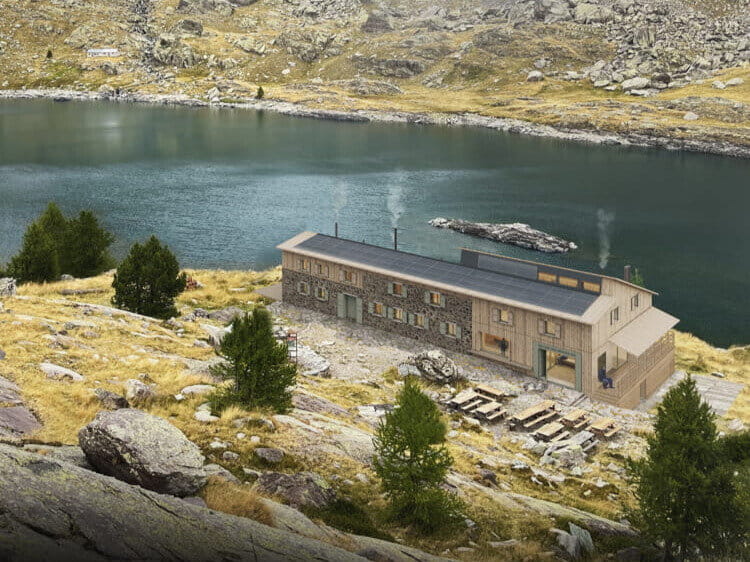
Upstairs, hikers will have seven dormitories with six to 22 beds, with the toilet and shower facilities grouped on the same level, while the reception desk will be combined with a cloakroom and drying room that also serves as a self-catering room.
A simpler shelter open in winter
The renovation also focuses on sustainability. Gone are the showers, replaced by washbasin cubicles to reduce water and energy consumption, as well as the grey water to be treated.
Composting toilets will be installed on the garden level, which will also be accessible to passing members of the public. On the energy side, the future refuge will combine photovoltaic and thermal solar panels, supplemented by a wood-burning boiler to enable operation during the winter. The refuge will then be able to remain staffed for snow-based activities.
One major constraint remains: the site itself. The refuge adjoins the Vallée des Merveilles, a protected archaeological site that is home to nearly 100,000 Neolithic and Bronze Age rock carvings.
The project was therefore drawn up in consultation with the Architectes des Bâtiments de France and the Mercantour National Park. If the schedule is confirmed – subject to permits, contractors and grants – the refuge will close its doors at the end of spring 2027, while it undergoes its rebirth.
 EN
EN  FR
FR