
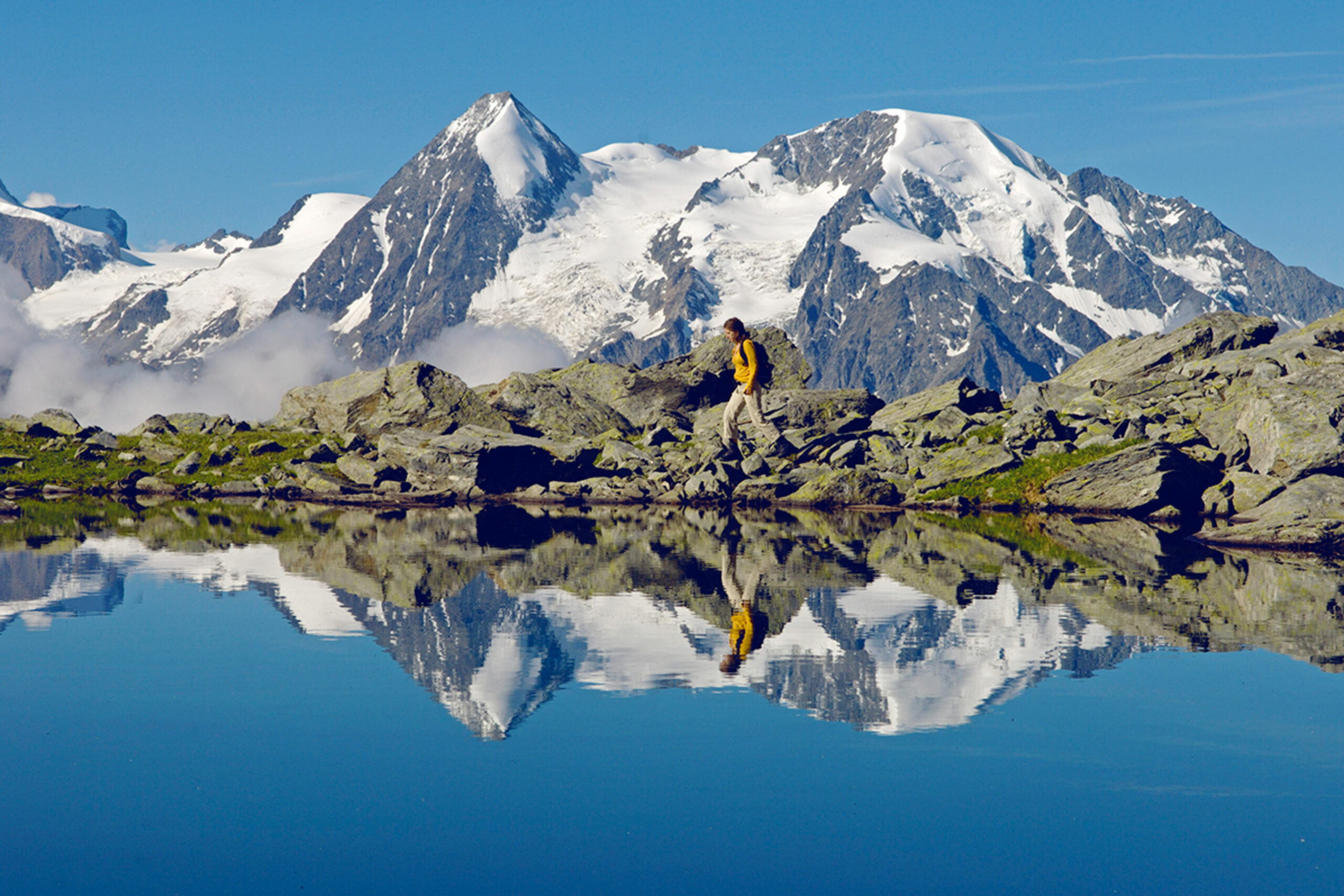
A few hours from France, the Val de Bagnes grow a Switzerland a very much alive mountain landscape. Around Verbier and La Tzoumaz, paths follow ancient irrigation channels, mountain huts overlook glaciers, alpine pastures can be visited at the pace of the herds, and raclette can be enjoyed all year round.
Here, the change of scenery isn't down to elaborate staging. It comes first and foremost from the landscape. Villages clinging to the slopes, pastures grazed by Hérens cows, high-altitude paths leading to mountain huts, and that very Swiss blend of precision, tradition, and managed nature.
The bisses, living memory of Valais
In Valais, the *bisses* tell a part of the local history. These ancient irrigation channels, developed from the Middle Ages, carried water from the glaciers to the valley crops. Several are still maintained today.
See this post on InstagramADVERTISING
The Bisse des Ravines crosses the heights of Bruson, passing through flowery meadows and larch forests. The Bisse du Levron traces a large arc above Verbier. The Bisse de Saxon, meanwhile, follows a 32-kilometre route between Siviez and the Col des Planches, via La Tzoumaz.
On this route, the Dzoras footbridge adds a truly spectacular touch. Suspended at 110 metres, it can be reached from La Tzoumaz in about 1 hour and 30 minutes' walk. The path remains accessible in sections, depending on the hikers' level and inclination.
Cabins for experiencing the mountains differently
The Val de Bagnes has six mountain huts. Chanrion, Brunet, Mont Fort, FXB Panossière, Louvie and Lein are all stopping points for hikers.
People come here for lunch, to spend the night or to break up a long journey. The appeal isn't just the panoramas. It's also the atmosphere of the communal meals, the simplicity of the place, and that feeling of isolation that gives the Swiss mountains their particular flavour.
For seasoned hikers, the Grand Tour des Combins remains one of the most memorable routes in the area. Eleven stages, five valleys, around nine days of hiking around a massif that reaches 4314 metres. Less frequented than the Tour du Mont-Blanc, the route crosses passes, glaciers, pastures and old routes between Switzerland and Italy.
A raclette that's not just for winter
In the Val de Bagnes, the alpine pasture is not just a setting. At over 2000 metres, the Sery-Laly pasture welcomes visitors with brunches served in a former stone shelter transformed into a refreshment bar.
Local cheeses, fresh bread, homemade jams, alpine milk and apple juice can be enjoyed with a view of the Petit Combin glacier. The cowbells of the Hérens cows accompany the meal, with no forced folklore.
The experience can be extended to an agritourism weekend, with hiking, meeting shepherds, sleeping in a stone shelter and sharing raclette facing the peaks. The price is advertised at 220 Swiss francs per adult and 185 Swiss francs per child from 8 years old, including accommodation and half-board.
Because here, raclette remains a serious matter. Three dairies and four mountain pastures produce Raclette du Valais PDO. Each wheel bears the mark of its location, its altitude, and the flowers grazed by the herds. In Verbier, you can even find vending machines to buy potatoes, cured meats, gherkins, and cheese at any hour.