
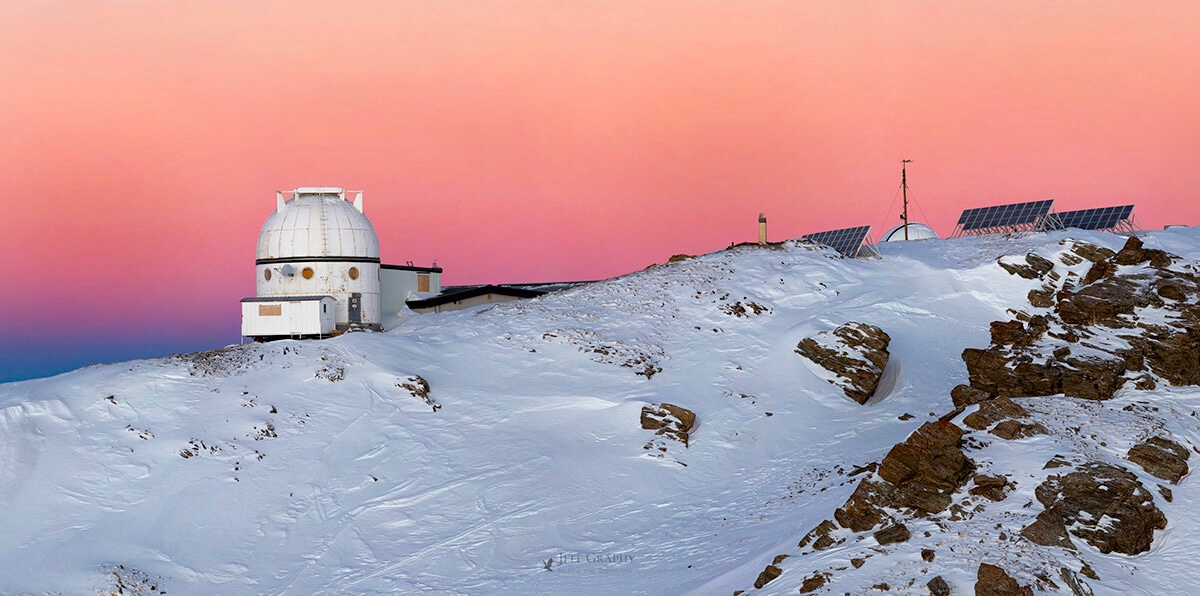
In the Queyras, At the Saint-Véran Observatory, it is possible to spend a night at an altitude of nearly 3,000 meters. The winter access is well worth it: four hours of hiking or a hike on skis before observing nebulae and galaxies under one of the most preserved skies in the Alps.
You first have to conquer the sky on foot. In winter, reaching the Paul Felenbok Observatory in Saint-Véran is no ordinary tourist visit. The ascent takes about four hours on skis or a good level of hiking.
Once there, the mountain changes completely to a different subject. The peaks disappear in the darkness and the gaze turns to space.
A telescope of 50 centimeters under the dome
The observatory has a dome dedicated to the public. Visitors can observe galaxies, nebulae and deep-sky objects using a 50-centimeter-diameter Ritchey-Chrétien telescope with a focal length of four meters.
The Queyras has particularly low light pollution, which gives clear nights an observation quality rarely found elsewhere.
The experience remains, however, reserved for experienced participants during the winter. Access depends on weather conditions and the avalanche bulletin, and requires either excellent physical condition or good backcountry skiing skills.
A more accessible version exists in the village
For those who prefer to keep their calves at rest, the Maison du Soleil in Saint-Véran also offers observation evenings at approximately 2,000 meters.
The sessions begin with an introduction to the facilities before using professional telescopes. They are accessible to families and children.
The Queyras also develops several nighttime experiences: cross-country skiing in the moonlight, ice climbing in the evening, and outings under the stars.
But spending the night in a high-altitude observatory is a different matter. You climb up there like for a mountain race, and then you end the day by looking much further than the peaks surrounding Saint-Véran.