
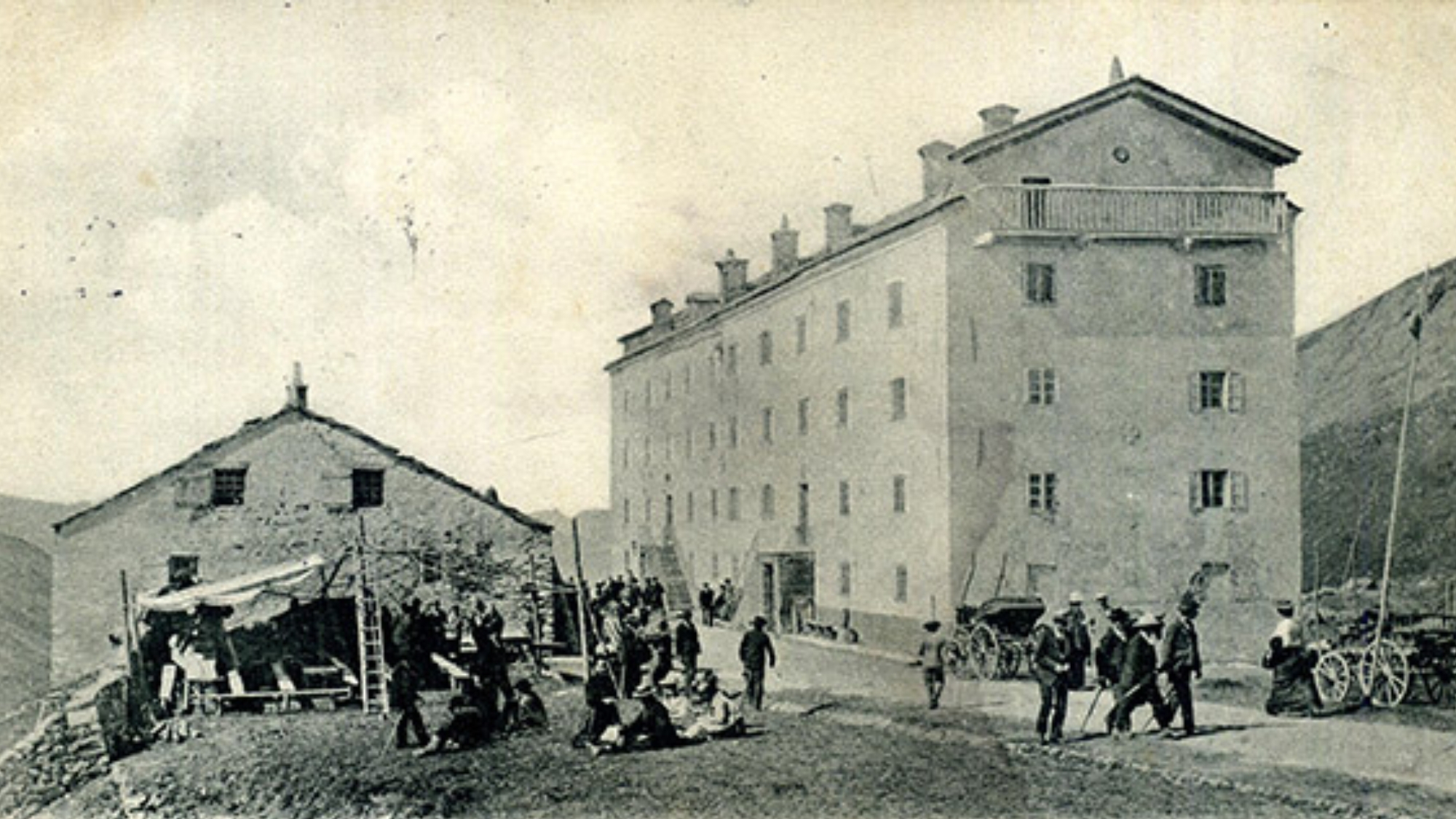
It has seen centuries and travellers pass by. Perched at 2,188 metres, straddling the Franco-Italian border, the Hospice du Petit-Saint-Bernard (Haute Tarentaisehas watched over the pass for nearly a thousand years. Destroyed, rebuilt, abandoned, then resurrected, this massive building alone tells the turbulent history of a strategic passage point between the Alps.
- READ OUR SPECIAL REPORT : Haute Tarentaise, «the roof of Savoie»
«The hospice was founded in the 11th century» Remember Lou Julien, Information point manager. In the spirit of Saint Bernard, who established his hospices on the borders of the Alps. One here, between France and Italy, the other between Italy and Switzerland.
But the origins of the site go back even further: originally built near the old Roman caravanserai, east of the pass, the building has its roots in the 6th century, before being rebuilt in its current location in the early 12th century.
Situated on a strategic transalpine route, the hospice had a dual purpose: spiritual and hospitable. It offered lodging and food to pedlars, pilgrims, and merchants exhausted by the crossing. A notable difference with its elder sibling.
Destroyed by wars, left to ruin
«The one at the Great St Bernard is open all year round, there are still monks. We, here, there's no religious spirit, but we keep the same spirit of welcome.» underline Lou Julien.
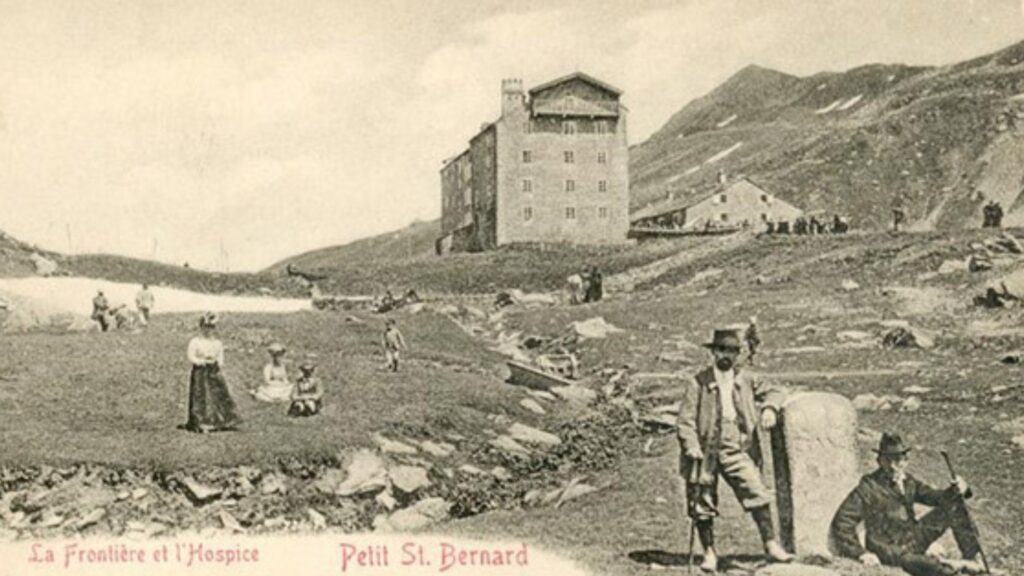
The history of the hospice is also a long series of destructions. «It belongs to the Order of Saint Maurice, a religious and military order. It has often been bombed, plundered, and destroyed,» summarises the person in charge of reception.
Wars and fires have ravaged it several times, but it has always been rebuilt to maintain its purpose. Until the last straw: heavily damaged by the fighting of the Second World War, the building was abandoned, left to the vagaries of border conflicts between France and Italy.
A cross-border revival
Located in the commune of Séez but owned by the Italian Order of Saints Maurice and Lazarus, the hospice finds itself at a complex administrative crossroads. «As it was first on Italian soil, then, the border having moved, on French soil, it had to be demolished or rehabilitated.»
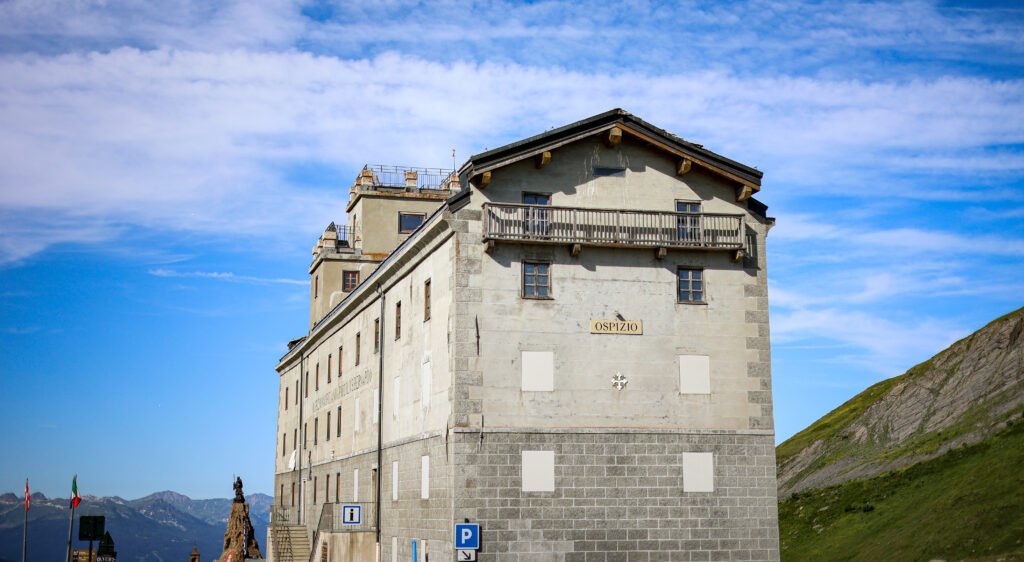
It is the second option that prevails, thanks to a considerable turnout. « An association from Petit-Saint-Bernard was set up and went to see the owner in Turin to explain the project to him. The Mauritian Order agreed to finance half of the work initially. » The remainder will be borne by the European Community and the French and Italian public authorities.
As part of the Savoie General Council’s «Green Passes» operation, the project plans to develop, floor by floor, an information centre, an exhibition space for Savoyard and Aosta Valley products, a mountain pass museum, a stopover guesthouse, and even a European meeting space. This is a long-term undertaking, constrained by the altitude.
An awakening wing
«The work could not be carried out during the summers.» precise Lou Julien. Reopened in 1995, the hospice has thus grown in stages. «I've been here for over twenty seasons. Right at the start there was this, then a bit more each year… The project has really been seen through to completion, and that’s a good thing.»
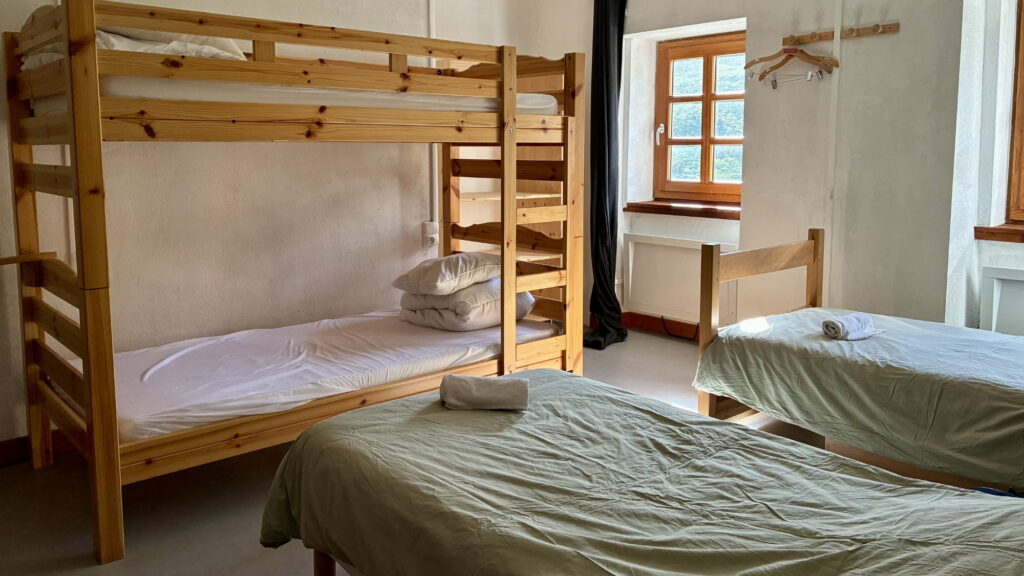
The adventure is not quite over, however. Today, only part of the building has been fitted out. The equivalent remains to be restored on the other side. «That wing is still under design.» The dream? «Open even in winter» and gaining capacity in the summer.
But the mountain imposes its limits: avalanche zones and strong winds make access difficult. A fine ambition remains. «We have an exhibition hall that could be even better utilised, by creating a beautiful gallery.» To write, one day, a new chapter in this millennial story.