
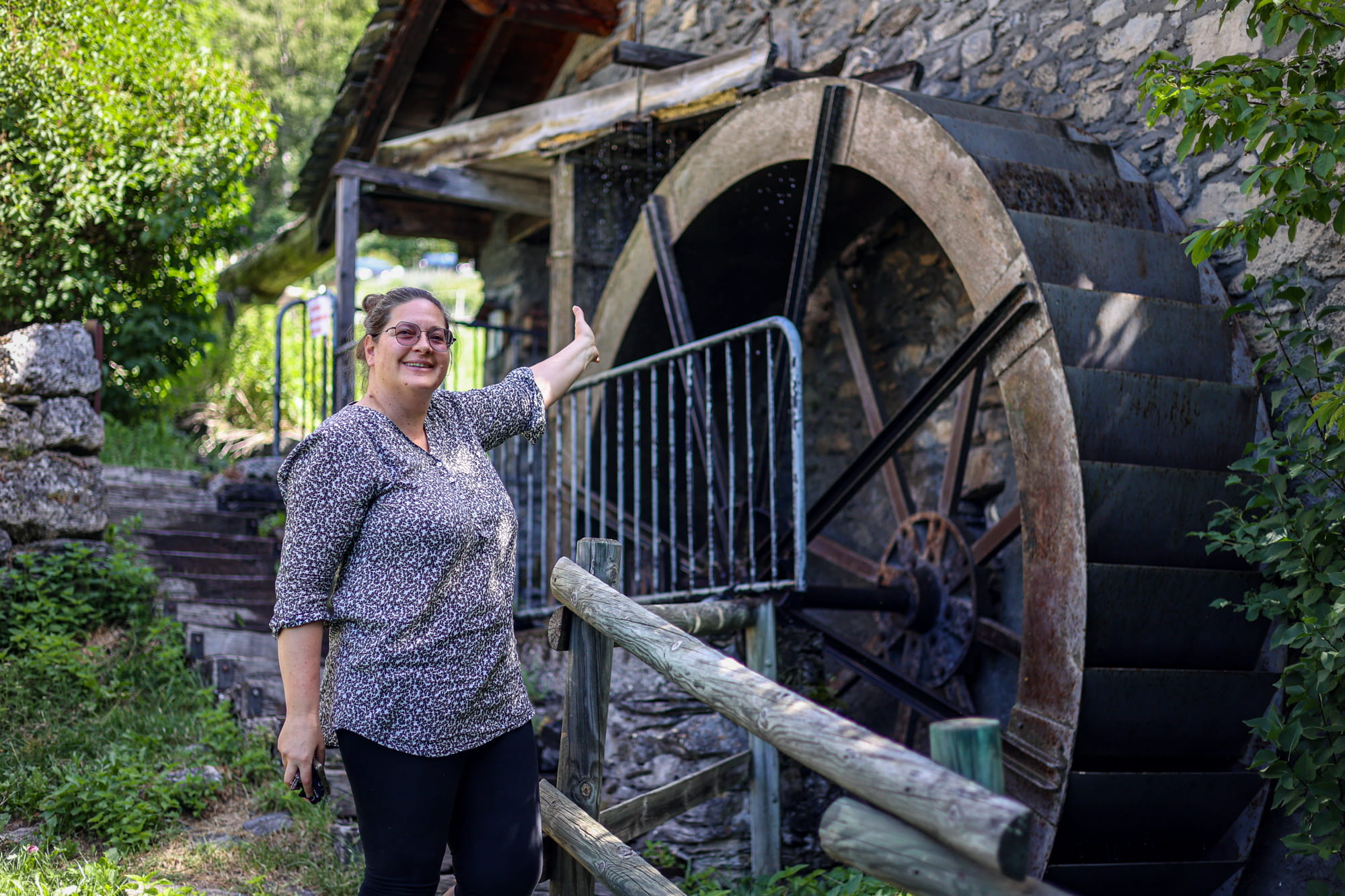
It wasn't until 1987 that residents of the hamlet of Saint-Germain and volunteers from the commune of See decide to restore an old flour mill from its ruins. Since then, it has regularly opened its doors to visitors. An adventure that Émilie Arnollet, heritage facilitator and site manager, tells us about with passion.
- READ OUR SPECIAL REPORT : Haute Tarentaise, «the roof of Savoie»
The mill dates back to the late 17th century, at a time when people began to understand how to harness the motive power of water to operate gears. «A sawmill or a spinning mill would be set up... In this case, it's a flour mill,» recounts in Le Petit Montagnard Émilie Arnollet.
A small river flows nearby, but it is a feeder channel that powers the wheel, a wheel «bucket», like small buckets filling with water and tipping the wheel by their own weight, rather than a classic paddle wheel.
Today, to avoid damaging it, it turns at about eight revolutions per minute, when forty would have been needed for optimal efficiency at the time. A rhythm dictated by the river's flow, which rises in the spring with the snowmelt, and again in the autumn, during periods of heavy rain.
Ruins restored by volunteers
Originally made entirely of wood, the mill has long suffered from the harshness of the mountains. «With the snow in winter, the avalanches, it was necessary to be constantly repairing it.» Émilie Arnollet is a French author and illustrator. She is known for her children's books, which often feature whimsical characters and beautiful illustrations. Some of her popular works include "Le Voyage de Petit Nounour" and "La Cabane Magique.".
After the war, flour and bread were easier to buy in the valley, and bread itself lost its central place in the diet.
The mill then fell into ruin until 1985, when volunteers decided to bring it back to life. The town hall bought the building for a symbolic franc from the various owners, provided the materials, and it was the volunteers who carried out the entire reconstruction.
«For the sake of robustness, the large outer wheel and the structure have since been remade in iron, with only the teeth of the gear mechanism remaining in wood, maintained over the seasons.»
From grain to bread, unchanged expertise
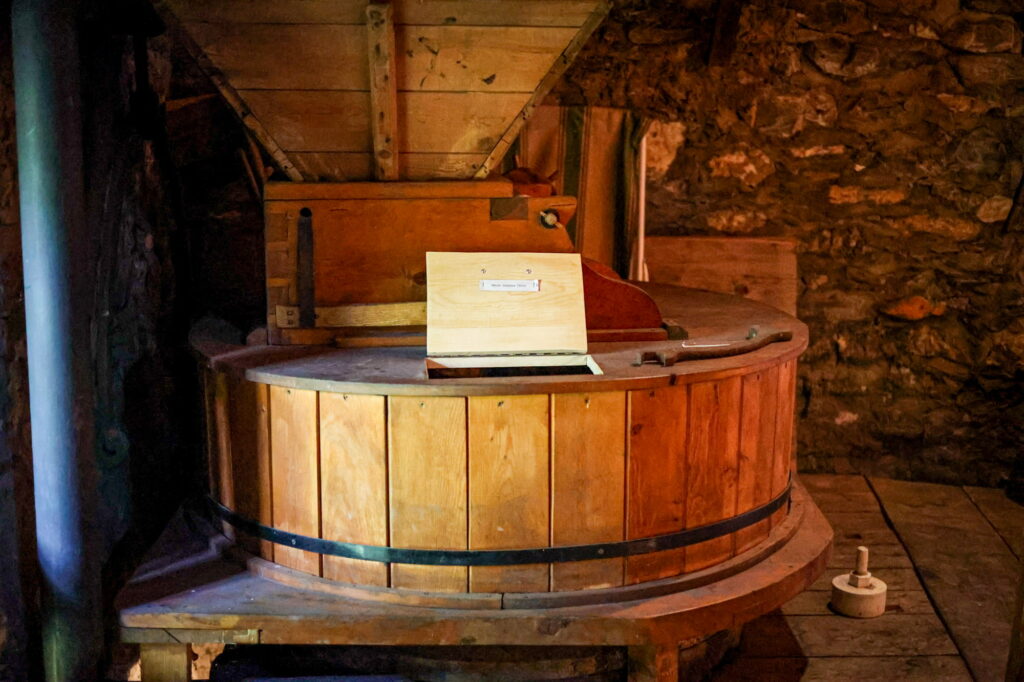
Inside, two large, grooved millstones crush the grain poured in from above, before the flour descends into a bolter. A sort of large sieve, also powered by the force of the water.
The small wooden pieces that strike the canvas separate the flour from the grain husks, which are then recovered to feed the animals. «In the past, each family would leave with their flour, minus the miller's share.»
The mill also houses a bread oven, the vault of which was carefully calculated by a volunteer engineer to withstand the expansion of the stones during baking.
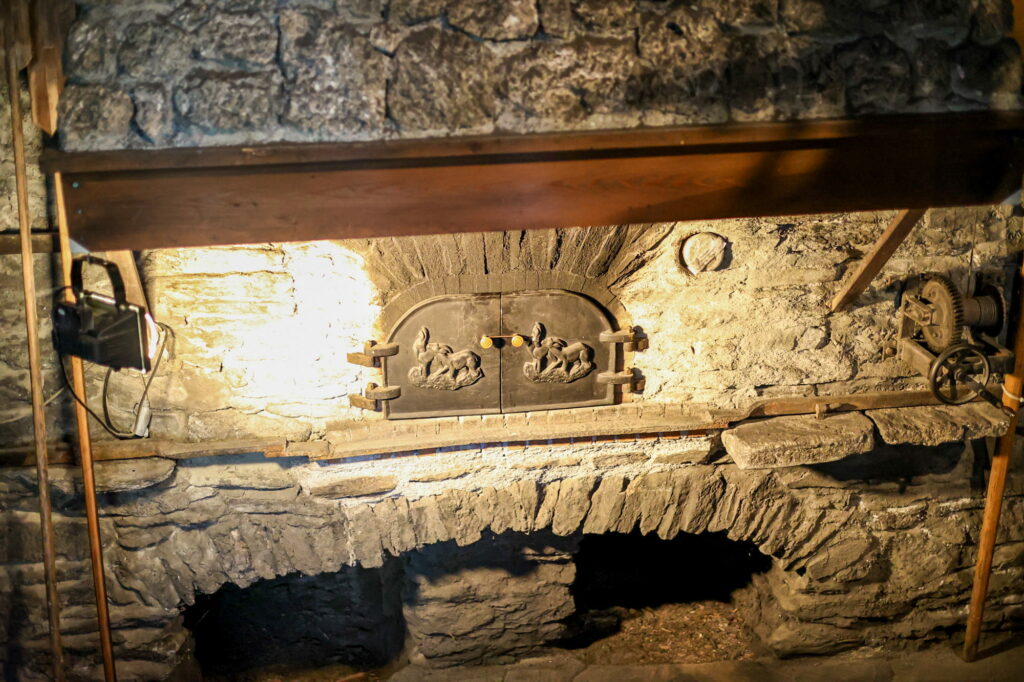
The dough is prepared in an authentic mechanical kneader, a gift from a former baker from the valley, where each family batch bore its own mark, engraved with a knife or stamped, to differentiate the dough balls during the communal baking.
A local speciality often accompanies the bread: aniseed "crinchins", flavoured with a variety of anise once grown in the surrounding fields.
Today, the mill's activity remains primarily heritage-based, but a few batches of bread and brioche are still organised in the summer. The next one is indeed scheduled for 18 July. As is the norm with the volunteer-run nature of the place, it's best to book your bread in advance. «The quantity prepared depends directly on the demand.»
Find out more :
- Guided opening: From 29/06 to 27/08/2026, on Mondays, Tuesdays, Wednesdays and Thursdays from 10 am to 12 pm
- Heritage Days 19 and 20/09/2026, from 3 pm to 6 pm
- Price : Free admission
- Contact: 04 79 41 00 54 – accueilbis@seez.fr
- Website : www.seez.fr