
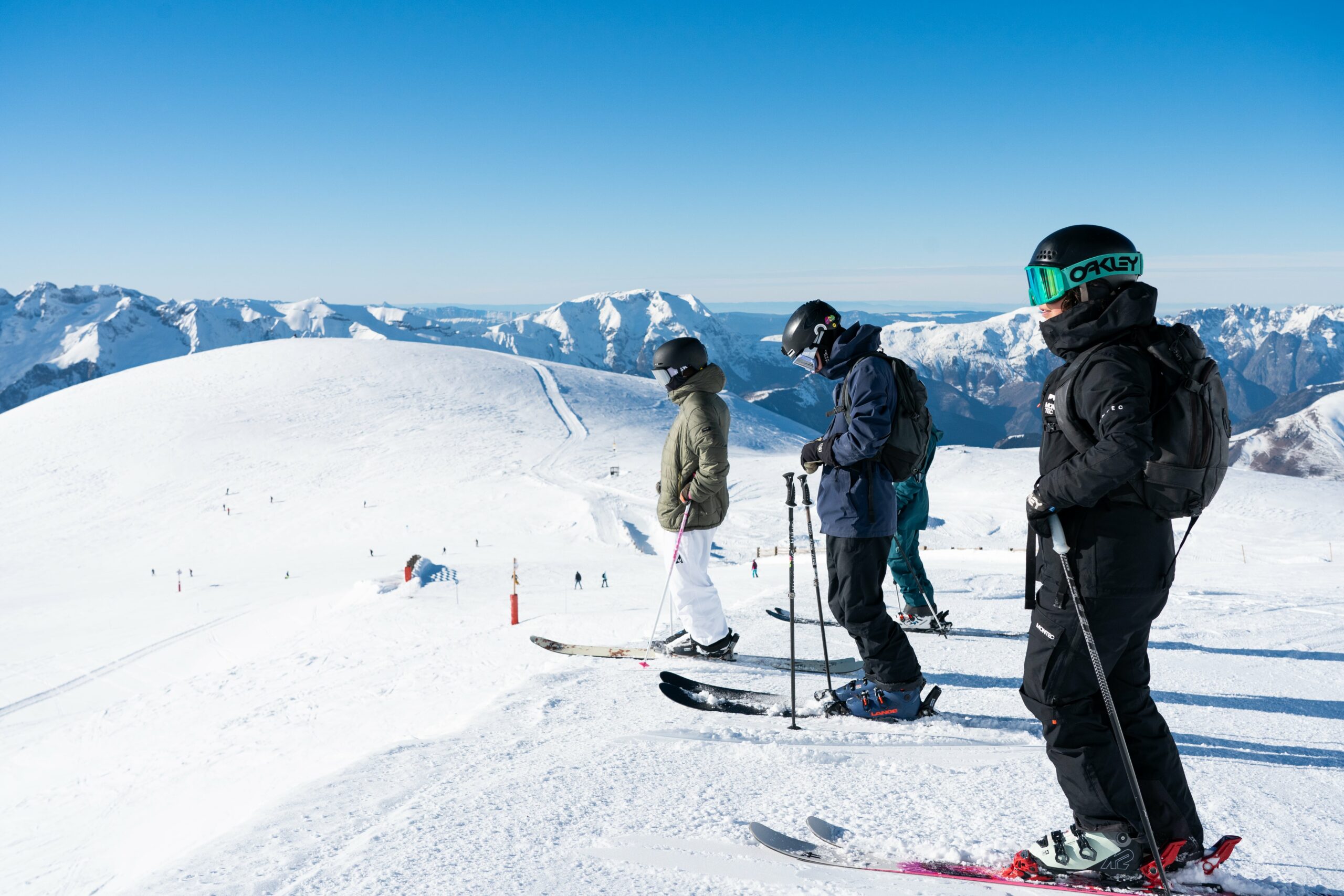
The debate is back in the spotlight. While Italy now requires helmet use on the slopes, the issue is gaining traction in France. The French ski instructors' union is in favour of its widespread adoption, without going as far as demanding strict legal obligation.
For a long time discreet on the matter, the National Union of French Ski Instructors has recently clarified its position. For its president Éric Brèche, wearing a helmet is part of a logic of responsibility.
«As sports educators, we must adopt responsible behaviour. And the helmet is part of that.» he explains.
On the slopes, conditions have changed. Snow is sometimes harder, visitor numbers are up in certain areas, speeds are higher… all factors that necessitate enhancing skier protection.
A practice already widely adopted
In fact, helmets have already become widespread. According to data from the National Mountain Safety Observation System, over 9 out of 10 skiers are equipped with them. Among children, the rate even reaches 97 %.
In many ski schools, helmets have also become compulsory for younger children.
Among monitors, the situation is a bit different. Around 77 % wear them, according to an internal survey. The most reluctant are often linked to old habits, rather than technical constraints.
Useful protection, but not absolute
From a medical perspective, the helmet offers a real benefit, particularly against direct impacts and skull fractures. But it doesn't solve everything.
«It protects against impacts, but its effect on concussions remains limited.» reminds one of a mountain doctor. The risk of overconfidence also exists, with some skiers tending to feel too protected.
Despite these limitations, professionals agree on one point: the helmet significantly improves overall safety.
The Italian example, a turning point?
Since this winter, the’Italy a franchi un cap en rendant le casque obligatoire sur l’ensemble de ses pistes, avec une amende pouvant atteindre 150 euros.
A rule that directly concerns certain French skiers, particularly in cross-border areas such as La Rosière ou Montgenèvre. Crossing the border without a helmet can now be costly.
In France, no obligation is on the horizon yet. However, the ski instructors' union's stance marks a further step in a debate that could intensify in the coming years.
On the slopes, at least, helmets have already become the norm. It remains to be seen whether the law will one day require them.
 EN
EN  FR
FR